
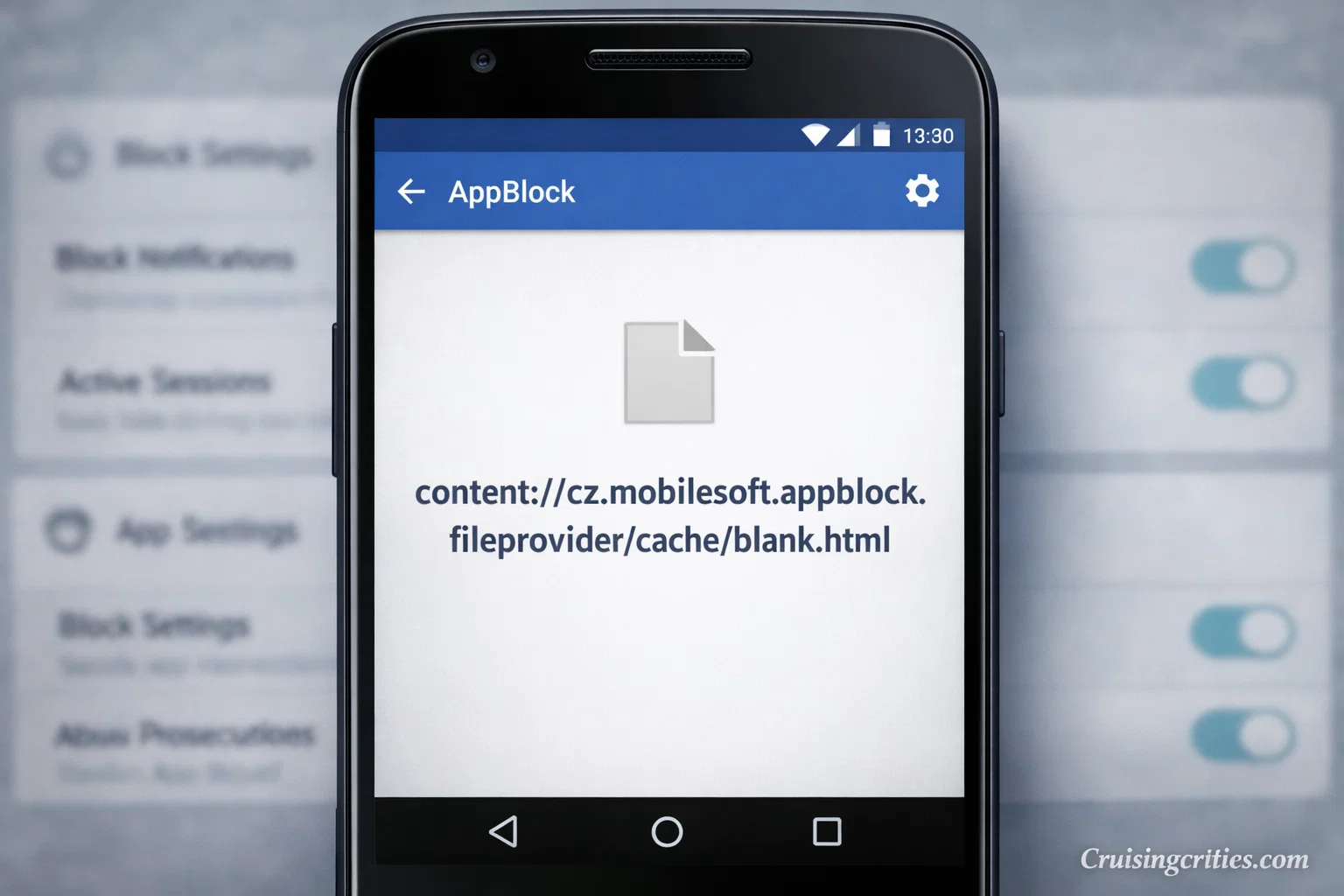
In the world of Android app development, certain technical terms and URIs (Uniform Resource Identifiers) can be a bit perplexing, especially for casual users. One such term that might have caught your eye is content://cz.mobilesoft.appblock.fileprovider/cache/blank.html. While it may look like an intimidating string of characters, it’s actually a fundamental part of how the AppBlock app functions.
This URI is part of Android’s Content Provider system, a mechanism that allows apps to securely share and access data without revealing sensitive information about their file system. Specifically, content://cz.mobilesoft.appblock.fileprovider/cache/blank.html refers to a placeholder file used by AppBlock, a productivity app designed to help users focus by blocking distracting websites and apps.
In this article, we’ll break down what this URI means, why it appears, and how it’s used in the context of the AppBlock app. Whether you’re a developer, an Android user, or just curious about what this URI does, you’ll gain a better understanding of its purpose and relevance to AppBlock’s functionality.
What Is “content://cz.mobilesoft.appblock.fileprovider/cache/blank.html”?
If you’ve ever come across the string content://cz.mobilesoft.appblock.fileprovider/cache/blank.html, you might have found yourself scratching your head in confusion. It looks like some kind of cryptic code or perhaps an error message. In reality, this is not a harmful piece of code, nor is it some security threat lurking on your device. Instead, this string is tied to AppBlock, a popular app designed to help you stay focused by blocking distractions on your Android phone.
This content URI belongs to Android’s Content Provider system, which acts as a secure way to reference files within an app. The URI points to an internal, placeholder HTML file stored in the app’s cache. While it may look like a complex address at first, understanding its function is quite simple once you break it down. AppBlock uses this URI to manage the way it handles blocking or restricting access to certain apps or websites.
In this article, we will dive deeper into what this URI represents, why it exists, and how it functions in the context of Android and AppBlock. Let’s explore everything you need to know about content://cz.mobilesoft.appblock.fileprovider/cache/blank.html.
Understanding Android URIs: A Quick Primer
Before we dive into the specifics of content://cz.mobilesoft.appblock.fileprovider/cache/blank.html, let’s first get a quick understanding of Android URIs. A URI (Uniform Resource Identifier) is a string used to uniquely identify a resource. Think of it as an address pointing to a file or data on your device.
In the context of Android, URIs are used by apps to access data in a way that keeps the file system hidden from view. This is especially important for maintaining security and privacy. For example, instead of providing direct access to a file path like /sdcard/myfile.txt, Android uses content URIs to manage access to the file without exposing its exact location. This method ensures that only authorized apps or components can access certain resources, providing an added layer of security.
In short, a URI in Android is like an address for a file or data resource. It ensures that an app can access data in a controlled and secure manner, without revealing the actual file path or compromising system integrity.
What Does “content://” Actually Mean?
The first part of the URI — content:// — is a special scheme used by Android to identify Content URIs. Content URIs are used to reference data managed by a Content Provider. But what exactly is a Content Provider?
A Content Provider is a key component in Android that allows apps to securely share data with each other or access data stored by other apps. This system ensures that apps cannot directly access another app’s private data unless the data owner explicitly shares it. Think of it as a security guard at the gate, making sure that only the right people (or apps) can get through.
In this case, content://cz.mobilesoft.appblock.fileprovider indicates that the data being accessed is being managed by AppBlock (created by MobileSoft). The content:// scheme tells Android that the following path is handled by an authorized content provider. In other words, this URI doesn’t expose any file paths directly but gives you a secure route to access the data — which, in this case, is the blank.html file used by AppBlock.
What Is a Content Provider in Android?
A Content Provider is an Android component that acts as a bridge for apps to securely access and share data with each other. In simple terms, it’s like a data broker. For instance, you might have an app that wants to access a photo stored on your phone. However, you don’t want it to have free reign over all your other files. A Content Provider makes sure that only specific files or data are shared, and it enforces the necessary security and permission checks.
When an app needs to access shared data, it uses a URI to query the Content Provider for the data. The Content Provider returns the requested data if the app has the necessary permissions to access it. In the case of AppBlock, this provider ensures that the app can access certain resources or files, like the blank.html file, without violating security protocols.
In our example, cz.mobilesoft.appblock.fileprovider is the identifier for AppBlock’s Content Provider. This authority is specific to AppBlock and ensures that only authorized components within the app (or other trusted apps) can interact with it.
Who Is MobileSoft and What Is AppBlock?
MobileSoft is a development company based in the Czech Republic, and it’s behind the popular Android app AppBlock. AppBlock helps users stay focused by blocking distracting apps and websites during specified times. For example, you can schedule it to block social media apps or distracting websites while you’re working or studying. This helps boost productivity by removing the temptation to check social media or browse the internet when you should be focused on other tasks.
AppBlock has gained popularity among people who struggle with distractions and need a simple tool to help them focus. Whether you’re studying, working, or simply want to disconnect, AppBlock can help by enforcing these blocks without requiring you to make constant adjustments. The app uses features like Content Providers to handle these restrictions securely, which is where the content://cz.mobilesoft.appblock.fileprovider/cache/blank.html URI comes into play.
If you have the app installed and notice this URI, it’s simply part of AppBlock’s internal process for blocking websites or apps during your focus time.
Breaking Down the Authority: cz.mobilesoft.appblock.fileprovider
Let’s break down the authority part of the URI: cz.mobilesoft.appblock.fileprovider. This is the Content Provider authority that uniquely identifies the content provider within the AppBlock app. In Android, the authority is essentially a namespace that ensures that the app requesting data from the content provider is accessing the right one.
The cz.mobilesoft part of the URI tells us that the app is developed by MobileSoft, while appblock specifies which app is using the provider. The fileprovider indicates that the data being accessed relates to files managed by AppBlock, which in this case, refers to cached content like blank.html.
This structure ensures that apps requesting data can identify which provider they need to query. It also allows developers to implement specific security measures to ensure that only authorized apps can interact with the data provider.
Why “cache/blank.html”?
So, why is this URI pointing to cache/blank.html? The cache directory is commonly used by apps to store temporary files that are used frequently but don’t need to be permanently stored. By using a cache, apps can speed up their performance and reduce the need for unnecessary reloading or recalculating data.
In the case of AppBlock, blank.html is likely a placeholder file used whenever the app blocks access to a website or app. It’s essentially an empty HTML file that appears instead of the blocked website. The blank.html file is not meant to display content; it just acts as a filler page to prevent errors or broken interfaces when access to a site is restricted.
Having this file stored in the cache ensures that it’s readily available for use, improving the app’s performance by avoiding the need to recreate the file each time. It also ensures that the app remains functional and that users don’t encounter unexpected issues when sites or apps are blocked.
Scenarios Where You Might See This URI
You might come across content://cz.mobilesoft.appblock.fileprovider/cache/blank.html in a few common scenarios, particularly if you use AppBlock. Here are some situations where you might encounter this URI:
- Browser History: If AppBlock is blocking a website, the browser might log the blank.html file instead of the blocked site. This ensures that the browser history isn’t disrupted, and there’s a placeholder to show instead of a blank page.
- System Logs: If you’re a developer or if you’ve enabled debugging on your phone, you might come across this URI in your system logs. It could be logged whenever AppBlock redirects a blocked request to blank.html.
- WebViews: If AppBlock uses a WebView to display content, this placeholder page might show when a website is blocked, ensuring that the WebView doesn’t load a blank or broken page.
These are perfectly normal occurrences and are part of how the app functions. If you see this URI in these contexts, there’s no cause for concern.
Is It Something to Be Worried About?
Rest assured, content://cz.mobilesoft.appblock.fileprovider/cache/blank.html is not something to worry about. While the URI might look a bit technical and alarming, it’s just a safe placeholder used by AppBlock to manage its functionality. This content URI does not represent any harmful or malicious activity.
- Not malware: The URI doesn’t lead to any harmful websites or files.
- No personal data leakage: Your private data is safe — the file only interacts with AppBlock’s cache and doesn’t expose any personal information.
- No external access: No one can access this URI unless they have access to the app itself, ensuring that it’s kept secure.
If you’re concerned about security, know that Android’s Content Provider system is designed to be secure, and this URI is part of the safe, internal processes used by AppBlock to enforce its blocking functionality.
How This Helps AppBlock Work Smoothly
This simple URI plays a vital role in keeping the AppBlock app running smoothly. By using content://cz.mobilesoft.appblock.fileprovider/cache/blank.html, AppBlock ensures that:
- Blocked websites have a placeholder to display instead of an error page.
- App performance is improved by storing files like blank.html in the cache for quicker access.
- User experience remains seamless because users won’t encounter broken pages or incomplete content when sites are blocked.
By implementing this Content URI system, AppBlock makes sure its features are efficient and user-friendly while maintaining a high level of security and privacy. This is how the app ensures your focus time remains uninterrupted without any issues in how it blocks content.
Can You Remove or Change It?
You might wonder if it’s possible to remove or change this URI. The short answer is, not really. This URI is an essential part of how AppBlock operates, and removing it would interfere with the app’s functionality. However, there are a few things you can do if you want to manage how the URI shows up:
- Clear the app’s cache: If the file is cluttering your browser history or logs, clearing the cache will remove the blank.html file temporarily.
- Disable AppBlock’s blocking rules: If you no longer want to see this URI, simply disabling the app’s blocking feature will stop it from being used.
- Uninstall the app: If you don’t need AppBlock anymore, uninstalling it will completely eliminate this URI and its associated files from your device.
However, as mentioned earlier, this URI is harmless, and there’s usually no need to remove or change it unless you’re facing a specific issue.
Troubleshooting: When Things Go Wrong
Although rare, you might encounter issues with AppBlock that prevent it from functioning as expected. If you notice that the blank.html file isn’t loading correctly, or you encounter errors related to the URI, here are some troubleshooting steps:
- Clear AppBlock’s cache: Clearing the cache might resolve issues related to the blank.html file.
- Update the app: Check for any available updates for AppBlock. Developers often release updates to fix bugs and improve performance.
- Restart your device: Sometimes, a simple restart can help reset app data and clear up minor issues.
- Check for system updates: Ensure that your Android system is up to date to avoid compatibility issues.
These steps should help fix any problems you encounter with AppBlock and the blank.html file.
Best Practices for Android Content URIs
For developers or users curious about best practices for managing Content URIs in Android, here are a few tips:
- Avoid sharing raw file paths: Always use Content Providers to manage data securely.
- Store temporary files in the cache: Use the cache for non-essential files like blank.html that can be recreated if needed.
- Implement proper security measures: Make sure that the data accessed through Content URIs is secure and only shared when necessary.
Following these best practices helps keep apps secure, efficient, and user-friendly.
Why Developers Use Placeholder HTML Files
Placeholder HTML files like blank.html are often used by developers for a variety of reasons:
- Prevent errors: A blank page is better than an error message.
- Ensure a consistent user experience: Placeholder files ensure that apps behave predictably.
- Avoid showing raw errors to users: Instead of a broken page, users see something functional.
This simple placeholder solution is one way developers ensure that their apps run smoothly without frustrating users.
Read More: urlwo: A Complete Guide to Smarter Link Management and Optimization
Conclusion
In conclusion, content://cz.mobilesoft.appblock.fileprovider/cache/blank.html is simply an Android Content URI used by the AppBlock app to manage blocked content. It points to a placeholder HTML file stored in the app’s cache, ensuring that users have a smooth experience without running into errors when content is blocked.
This URI is a safe, normal part of the app’s functionality, and there’s no need to worry about it unless you’re troubleshooting issues related to AppBlock. Understanding how Content URIs work in Android helps demystify this cryptic string and allows users and developers alike to appreciate the elegance of how data is securely managed.
Frequently Asked Questions (FAQs)
- Is this URI dangerous?
No, this URI is completely safe and part of AppBlock’s functionality. - Can I delete the blank.html file?
Clearing the app’s cache will remove this temporary file, but there’s no need to do so unless you’re troubleshooting. - What happens if AppBlock isn’t blocking anything?
You won’t see the URI, as it’s only used when the app is blocking content. - Can I stop seeing this URI in my browser history?
Disabling the app’s blocking feature will prevent it from appearing. - How do I fix issues related to this URI?
Clear the app’s cache, update AppBlock, or restart your device to fix any problems.